
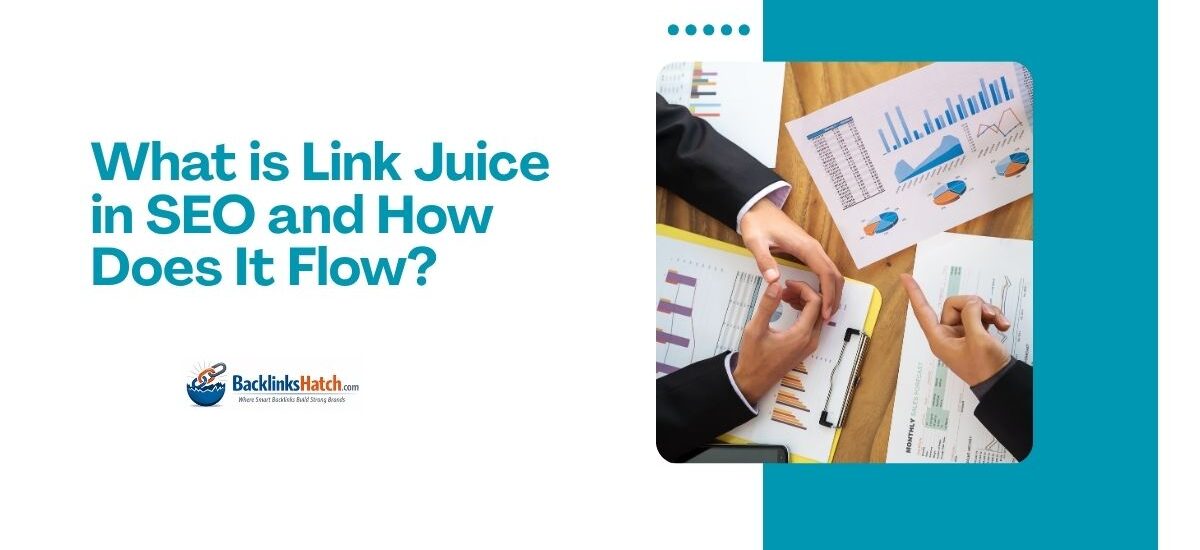
If you’ve ever wondered why some pages rank higher despite having fewer backlinks, the answer often lies in link juice in SEO — one of the most powerful yet misunderstood forces in search engine optimization. Understanding how link equity moves across your website can completely transform your ranking strategy.
Table of Contents
1. Understanding the Basics of SEO Authority
Before diving deep, it’s important to understand what domain authority, page authority, and ranking signals really mean in the context of modern search engines.
What Is Link Equity and Why Does It Matter?
Link equity — commonly called “link juice” — refers to the value and authority that one webpage passes to another through a hyperlink. When a high-authority website links to your page, it essentially vouches for your content, and Google’s algorithm interprets that vote of confidence as a positive ranking signal.
Think of it like a river system. A powerful river (a high-authority domain) flows into smaller streams (your pages), giving them the momentum they need to move forward in search rankings. The more authoritative the source, the stronger the flow of equity passing through that link. This concept dates back to Google’s original PageRank algorithm, which assigned numerical scores to pages based on how many quality links pointed to them. While PageRank is no longer publicly displayed, the core principle remains deeply embedded in how search engine crawlers evaluate and rank content today.
The Role of PageRank in Modern SEO
Even in 2026, PageRank remains a foundational concept behind Google’s ranking system. While the algorithm has evolved into something far more sophisticated — incorporating E-E-A-T signals (Experience, Expertise, Authoritativeness, Trustworthiness), user behavior metrics, and semantic relevance — the idea that links carry transferable authority has never disappeared.
Modern SEO tools like Ahrefs, Moz, and Semrush have built their own metrics — Domain Rating (DR), Domain Authority (DA), and Authority Score — to estimate how much link equity a site holds. These scores directly influence how much juice a site can pass through its outbound links. Google’s John Mueller has confirmed multiple times that internal and external links continue to play a meaningful role in how crawlers discover, evaluate, and prioritize content across the web.
2. What Is Link Juice in SEO and How Is It Transferred?
Link juice in SEO is the measurable authority that flows from one URL to another through a clickable hyperlink. Every time a page links out to another page, it shares a portion of its accumulated authority. This transfer is influenced by several technical and contextual factors that every SEO professional should understand.
How Dofollow vs. Nofollow Links Affect Authority Flow
Not all hyperlinks pass the same amount of authority — or any at all. This distinction is one of the most critical concepts in link-building strategy.
Dofollow links are the standard type of hyperlink that allows search engine bots to follow the link and pass authority from the source page to the destination page. When a reputable news site or industry blog links to your content with a dofollow link, that’s a direct transfer of link equity that can positively impact your search rankings.
Nofollow links, marked with the rel=”nofollow” attribute, were introduced by Google in 2005 to combat spam. Traditionally, these links did not pass any link juice. However, in 2019, Google updated its stance, reclassifying nofollow as a “hint” rather than a directive — meaning Google may choose to follow and credit nofollow links in some cases.
Two additional attributes were also introduced: rel=”sponsored” for paid links and rel=”ugc” for user-generated content like comments and forum posts. Understanding these distinctions helps you build a natural backlink profile that search engines trust and reward.
| Link Type | Passes Link Juice | Common Use Case |
| Dofollow | ✅ Yes | Editorial backlinks, guest posts |
| Nofollow | ⚠️ Sometimes | Blog comments, press releases |
| Sponsored | ❌ No | Paid placements, affiliate links |
| UGC | ❌ No | Forum posts, user comments |
| Internal Links | ✅ Yes | Site navigation, content hubs |
Factors That Determine How Much Juice a Link Passes
The amount of link equity transferred through any given link is not fixed — it depends on a combination of factors that Google’s algorithm weighs simultaneously.
Source Page Authority is the most obvious factor. A link from a page with a high Domain Rating naturally passes more authority than a link from a newly created or low-quality page. However, authority alone isn’t enough — topical relevance matters just as much. A backlink from a tech blog carries more juice for a software company than a link from a cooking website, even if both have the same DA score.
The number of outbound links on the source page also plays a critical role. When a page links to 100 different websites, the authority is diluted across all 100 recipients. Conversely, a page that links to just 2 or 3 sites concentrates its equity more powerfully. This is why editorial links — those placed within the natural body of content rather than in footers or sidebars — are considered more valuable. The anchor text used in the link also sends a relevance signal to search engines, helping them understand what the destination page is about.
3. Internal Link Juice and Site Architecture
Internal linking is where many website owners leave massive amounts of SEO value on the table. While external backlinks often steal the spotlight, your internal link structure controls how link juice flows throughout your entire website — making it one of the highest-leverage activities in on-page SEO.
How Internal Links Distribute Authority Across Your Site
Every time a high-authority page on your website links to another internal page, it passes a portion of its accumulated equity to that destination. This is how smart SEO teams amplify their most important pages without building a single new backlink.
Consider a website where the homepage receives the majority of external backlinks. The homepage naturally becomes the most authoritative page on the site. By strategically linking from the homepage to key service pages, product pages, or cornerstone blog content, you’re directing the flow of PageRank to pages that need it most. This is called PageRank sculpting — a technique used by enterprise SEO teams to maximize the ranking potential of strategically important pages.
The concept of a content hub or pillar page strategy is built entirely on this principle. A pillar page covering a broad topic links out to cluster pages covering subtopics, and those cluster pages link back to the pillar. This silo structure concentrates topical authority and distributes link equity in a way that signals depth of expertise to Google’s semantic search algorithms.
Common Internal Linking Mistakes That Waste Link Juice
Even technically sound websites make critical internal linking errors that silently drain their SEO potential. Recognizing and fixing these issues can produce ranking improvements without any external link-building effort.
Orphan pages are among the most damaging issues — these are pages that exist on your website but receive no internal links from other pages. Because no equity flows into them, search engine crawlers may deprioritize or struggle to discover them altogether. Regular site audits using tools like Screaming Frog or Sitebulb can identify orphan pages so you can reconnect them to your link structure.
Broken internal links (404 errors) are another common problem. When a page that previously passed link juice is deleted or its URL changes without a proper 301 redirect, all the equity that flowed through that link disappears. Maintaining clean redirect chains and fixing broken links is essential for preserving your site’s internal equity flow. Additionally, overusing generic anchor text like “click here” or “read more” wastes the opportunity to send meaningful contextual relevance signals through your internal links — always use descriptive, keyword-rich anchor text where it reads naturally.
4. External Link Juice: Building and Earning Authority
Earning high-quality external backlinks remains one of the most reliable ways to increase your site’s overall link equity and organic search visibility. But not all link-building tactics are created equal, and understanding the difference between strategies can save you from Google penalties.
White-Hat Link Building Strategies That Generate Real Authority
The most sustainable way to earn link juice in SEO is through strategies that genuinely add value to the web — what Google refers to as “earning” links rather than “building” them.
Digital PR and data-driven content are among the most powerful white-hat link-building methods available. By publishing original research, surveys, industry reports, or unique datasets, you create linkable assets that journalists, bloggers, and industry analysts naturally want to cite. A single well-placed piece of data-driven content can earn dozens of high-authority backlinks from news outlets and industry publications, dramatically increasing your domain’s cumulative link equity.
Guest posting on authoritative industry websites remains highly effective when done correctly. The key is to target websites with genuine traffic, strong topical authority in your niche, and editorial standards that prevent low-quality submissions. Writing genuinely useful, original content for these platforms earns you a contextual dofollow backlink that passes meaningful authority. Other effective tactics include broken link building (finding dead links on high-authority sites and offering your content as a replacement), HARO (Help a Reporter Out) for earning media mentions, and building genuine relationships with industry influencers who may naturally reference your content.
How to Avoid Link Schemes That Drain Your Authority
Google’s Spam Policies are explicit about link schemes — any attempt to manipulate PageRank through artificial or deceptive link building can result in manual penalties that tank your rankings.
Private Blog Networks (PBNs) are perhaps the most notorious form of manipulative link building. These networks of fake or expired domain websites exist solely to pass link juice to a target site. While they may produce short-term gains, Google’s spam detection systems have become increasingly sophisticated at identifying PBN patterns, and sites caught using them face algorithmic or manual penalties that can take months or years to recover from.
Paid link schemes, link exchanges (“I’ll link to you if you link to me”), and comment spam all fall into the same category of tactics that violate Google’s guidelines. Even well-intentioned practices like excessive exact-match anchor text in backlinks can trigger over-optimization signals. The safest long-term strategy is to focus on earning links through content quality, brand building, and genuine relationship development — all of which produce sustainable ranking improvements that compound over time.
5. Technical Factors That Block or Enhance Link Juice Flow
Even a perfect backlink profile can be undermined by technical issues on your website that block, dilute, or misdirect the flow of link equity. This is the intersection of technical SEO and link-building strategy.
How Redirects and Crawl Budget Impact Equity Flow
Redirect chains are one of the most commonly overlooked sources of link juice loss. When Page A redirects to Page B, which then redirects to Page C, a portion of the link equity is lost at each hop in the chain. The longer the chain, the more authority bleeds away before reaching the final destination.
301 redirects (permanent redirects) pass approximately 90–99% of link equity to the destination page, making them the preferred method when consolidating URLs or migrating content. 302 redirects (temporary redirects), on the other hand, traditionally do not pass full link equity — Google treats them as temporary and may not transfer authority. When site migrations happen without proper redirect mapping, thousands of earned backlinks can lose their equity overnight, causing significant ranking drops that are difficult to diagnose without a thorough backlink audit.
Crawl budget also plays a subtle but important role. Search engines allocate a limited number of crawls to each website per day. If your site is bloated with duplicate content, thin pages, or URL parameters creating thousands of near-identical URLs, your crawl budget gets wasted on low-value pages — meaning high-value pages where you’ve concentrated link juice may not get crawled and re-evaluated as frequently as they should. Tools like Google Search Console can help identify crawl budget issues and prioritize fixes.
The Impact of Canonicalization on Link Juice Consolidation
Canonical tags (rel=”canonical”) are an essential tool for consolidating link equity when multiple URLs serve the same or similar content. Without proper canonicalization, link juice can be split across several versions of the same page — the www and non-www versions, HTTP and HTTPS versions, or paginated versions of a blog archive.
When search engines encounter duplicate or near-duplicate content across multiple URLs, they select one as the canonical version to index and rank. If your canonical tags don’t match what search engines naturally prefer, equity gets fragmented. For e-commerce websites with product pages accessible through multiple category paths, this can result in significant authority dilution across hundreds or thousands of pages.
Implementing a consistent canonical strategy — combined with a logical URL structure, proper hreflang tags for multilingual sites, and clean XML sitemaps — ensures that your accumulated link equity is consolidated and flows efficiently to the pages most deserving of ranking power. Regular technical SEO audits should always include a canonical review to prevent ongoing equity leakage.
6. Measuring and Maximizing Link Juice on Your Website
Understanding link juice is one thing — actually measuring it and using that data to drive strategic decisions is what separates average SEO from elite-level optimization.
SEO Tools and Metrics to Track Link Equity
No single metric perfectly captures link juice in SEO, but several tools provide reliable proxies that guide strategic decision-making across your entire website.
Ahrefs’ URL Rating (UR) and Domain Rating (DR) measure the strength of a page’s and domain’s backlink profile, respectively, giving you a sense of how much link equity any given page holds and could theoretically pass. Moz’s Page Authority (PA) and Domain Authority(DA) function similarly, using their own proprietary link graph to estimate ranking potential. Semrush’s Authority Score incorporates both backlink data and organic traffic signals, offering a more holistic view of a page’s overall strength.
For internal link analysis, tools like Screaming Frog SEO Spider allow you to map the exact flow of internal links across your site, identify pages that receive the most internal equity, and spot orphan pages or broken links that disrupt flow. The Google Search Console Links report shows which of your pages receive the most internal links and which external pages link to you most frequently — invaluable data for prioritizing your link equity optimization efforts. Combining these tools gives you a comprehensive picture of where your authority is concentrated and where it’s being lost.
Building a Link Juice Optimization Strategy
With data in hand, building a systematic approach to link equity optimization requires aligning your link building, internal linking, and technical SEO efforts around a single goal: getting the right authority to the right pages at the right time.
Start with a content audit to identify your highest-authority pages (measured by inbound backlinks and internal link counts) and your most strategically important pages (those targeting high-value commercial keywords). Then, build internal link paths that connect the two — ensuring your authority-rich pages are actively passing equity to your revenue-critical pages. This process should be revisited quarterly, especially after publishing new content.
Externally, focus your link acquisition efforts on building links directly to pages that need authority boosts — not just your homepage. Deep linking (earning backlinks to internal pages rather than just the domain root) is far more powerful for improving the rankings of specific target pages. Combine this with consistent content velocity (regularly publishing high-quality content that earns natural links), proactive digital PR campaigns, and a clean technical foundation, and you create a compound effect where link juice flows efficiently through every layer of your website — powering rankings that are both strong and resilient.
Conclusion
Link juice in SEO is not just a technical concept — it’s the lifeblood of your website’s ability to rank, compete, and grow in organic search. From the moment a high-authority site links to your page, to how that authority travels through your internal link structure and reaches your most important content, every element of this system deserves deliberate attention.
The most successful SEO strategies treat link equity as a precious, manageable resource — one that can be earned through quality content, preserved through technical hygiene, and directed through strategic internal linking. By understanding and optimizing the flow of link juice, you’re not just improving rankings; you’re building a durable digital asset that compounds in value over time.
Start auditing your link structure today, fix the leaks, earn the right backlinks, and let the authority flow where it matters most.
Frequently Asked Questions (FAQs)
Q1. Does link juice from old backlinks still count? Yes, absolutely. As long as the linking page is still live, indexed, and not hit by a penalty, the link juice it passes remains active. However, if the source page’s authority drops over time — due to it losing its own backlinks — the juice it sends your way decreases proportionally too.
Q2. Can I control how link juice flows on my own website? Yes, and you should. Using internal links strategically, placing canonical tags correctly, and using nofollow attributes on low-priority links are all legitimate ways to guide how equity flows across your pages. This is what SEO professionals call PageRank sculpting.
Q3. How many internal links should I include on a page? There’s no hard rule, but Google has suggested keeping internal links to a reasonable number — typically what’s useful for the reader. From an equity perspective, the more links a page has, the more diluted the juice passed through each one. Focus on quality and relevance over quantity.
Q4. Does social media sharing pass link juice? No. Links shared on social platforms like Facebook, Twitter/X, LinkedIn, and Instagram are all nofollow by default, which means they don’t directly pass link equity. However, social sharing can drive traffic, increase brand visibility, and lead to organic backlinks from people who discover your content, which do pass juice.
Q5. What happens to link juice when I delete a page? When a page is deleted without a redirect, all the link juice pointing to that page from external and internal sources is lost. Always set up a 301 redirect to the most relevant alternative page to preserve as much of that equity as possible.
Q6. Is it better to have one strong backlink or ten weaker ones? It depends on context, but generally, one genuinely high-authority, topically relevant backlink is more valuable than ten links from low-authority sites. That said, a diverse backlink profile with links from multiple unique referring domains tends to signal natural link acquisition to Google — so both quality and diversity matter.