
Introduction
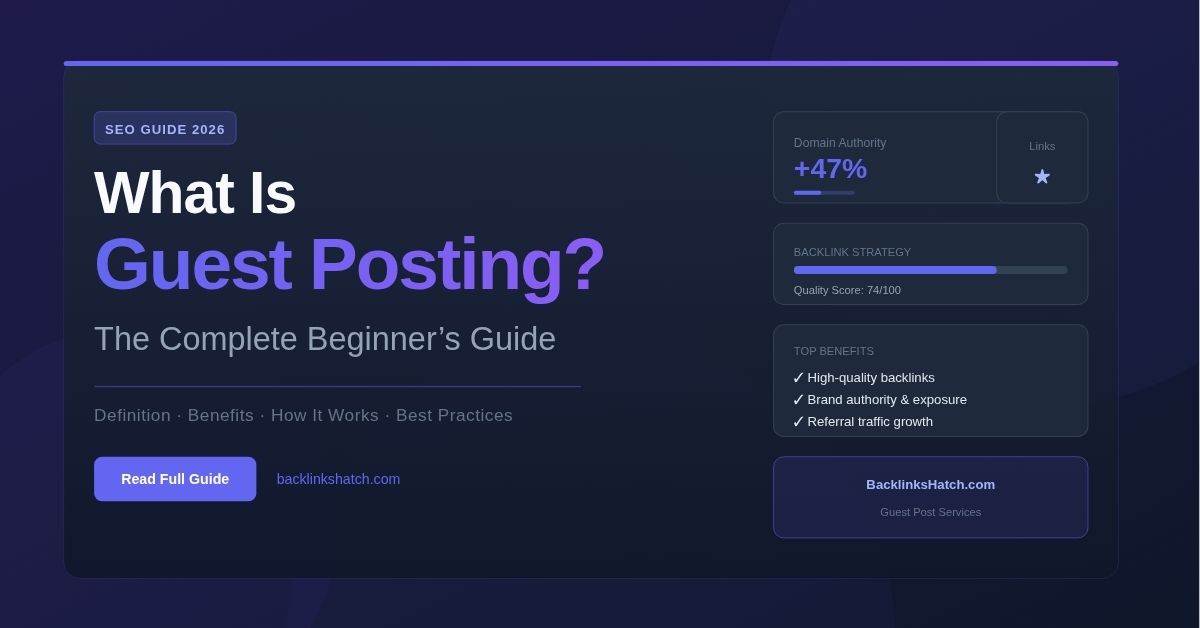
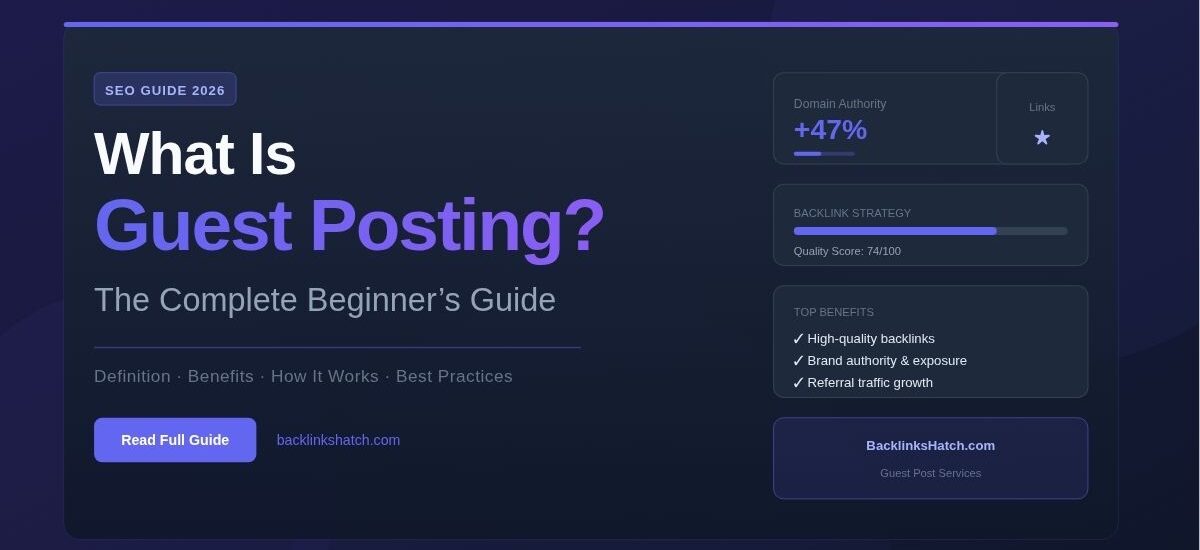
If you’ve ever wondered what is guest posting and why every digital marketer keeps talking about it, you’re in the right place. Guest posting is one of the oldest and most trusted strategies in content marketing and SEO, and in 2026, it remains as powerful as ever. Whether you’re a blogger, a business owner, or a freelance writer, understanding this strategy can dramatically change the way you grow your online presence, earn high-quality backlinks, and position yourself as an authority in your niche. If you’re looking for a professional guest post service to save time, platforms like BacklinksHatch specialize in exactly this. In this guide, we’ll break down the definition, benefits, and step-by-step process — starting from scratch.
1. What Is Guest Posting? Definition and Core Concept
At its most basic level, what is guest posting? It is the practice of writing and publishing an article on someone else’s website or blog. You, as the author, contribute original content to a third-party site in your industry or niche, and in return, you typically receive an author bio, a mention, and most importantly, a backlink pointing back to your own website. Think of it as being invited to speak at someone else’s event — you bring value to their audience, and they give you a platform and brand visibility in return.
The Basic Structure of a Guest Post
A standard guest post follows a simple structure: a well-researched article written according to the host site’s editorial guidelines, submitted by an external contributor. The post is published under your name and typically includes a short author bio at the bottom, where you can add one or two links back to your website. Some blogs allow a contextual link within the body of the article itself, which carries even more SEO value. The host site benefits by receiving fresh, expert-level content without producing it themselves. You benefit by reaching a new audience, gaining referral traffic, and earning a dofollow backlink that improves your site’s authority in the eyes of search engines. Both parties win — which is why this link-building strategy has survived for over a decade. According to Ahrefs, sites with strong backlink profiles consistently outrank competitors in competitive search queries.
Guest Post vs. Sponsored Post — What’s the Difference?
Many beginners confuse guest posts with sponsored posts, but they are fundamentally different. A guest post is an editorial contribution where you provide genuine value — it is not paid placement. A sponsored post, on the other hand, is a form of paid advertising where a brand pays a site to publish promotional content, and Google requires such links to carry a `nofollow` or `sponsored` tag. Guest posts, when done correctly, follow white-hat SEO best practices: the content is informative, non-promotional, and genuinely useful to the host site’s readers. This distinction matters enormously because paid links that violate Google’s link scheme guidelines can result in manual penalties that tank your rankings.
2. What Is Guest Posting Good For? Key Benefits Explained
Understanding what is guest posting is only step one — understanding why it matters is what will motivate you to actually start doing it. The benefits span SEO, brand building, audience growth, and professional networking all at once.
SEO Benefits: Backlinks, Authority, and Rankings
The most talked-about benefit of guest posting is the SEO impact. When a reputable website publishes your content and links back to your site, that link acts as a vote of confidence in Google’s eyes. This is what SEO professionals call a backlink or inbound link, and it is one of the strongest ranking factors in Google’s algorithm. The more high-quality, contextually relevant backlinks your site accumulates, the higher your domain authority climbs, and the better your pages rank in search engine results pages (SERPs). A link from a high-authority site in your niche is worth far more than dozens of links from low-quality or unrelated sites. This is why guest posting on niche-relevant blogs is considered one of the most effective white-hat link-building techniques. According to Moz’s Beginner’s Guide to SEO, link building remains one of the top two ranking factors Google uses to evaluate pages.
Brand Authority and Audience Reach
Beyond SEO, guest posting is a powerful brand-building tool. When your name and content appear on respected sites in your industry, people start to recognize you as an expert. This is called thought leadership, and it is invaluable in competitive niches. Every guest post you publish is essentially a trust signal — it tells a new audience that a site they already trust has vetted your knowledge and expertise. Additionally, guest blogging exposes you to targeted traffic you would never otherwise reach. A reader who discovers your work on a high-traffic blog may become a loyal subscriber, a customer, or a fellow collaborator. If you want a professionally managed approach to this strategy, explore BacklinksHatch’s Guest Post Services, which handle outreach, placement, and content creation for you.
3. How Guest Posting Works: The Step-by-Step Process
Now that you know the definition and benefits, let’s walk through how guest posting actually works in practice.
Finding the Right Sites to Pitch
Start by searching Google with queries like “write for us + [your niche]”, or “guest post guidelines + [your topic]”. You can also use tools like Ahrefs, SEMrush, or Moz to analyze competitor backlinks and discover which blogs are already publishing guest content. Look for sites with a Domain Rating (DR) or Domain Authority (DA) higher than your own, genuine organic traffic, an engaged readership, and clear niche relevance. Avoid sites that show signs of being part of a private blog network (PBN) or that publish any content regardless of quality. You can also save significant time by using a managed service like BacklinksHatch, which already maintains relationships with vetted, high-authority blogs across dozens of niches.
Writing and Submitting Your Guest Post
Once you have a confirmed topic and pitch, write content that is at minimum as good as — and ideally better than — what’s already on the host site. Study the site’s tone of voice, preferred content format, and the topics that get the most engagement. Write an article that delivers genuine, actionable value. Avoid overt self-promotion in the body — save that for your author bio. Use your target keyword naturally, add subheadings for readability, include relevant internal links to the host site’s existing content, and ensure your article is 100% original and plagiarism-free. According to HubSpot’s Marketing Blog, articles that are thoroughly researched and over 1,500 words consistently earn more shares and backlinks than shorter pieces.
4. Guest Posting Best Practices in 2026
The rules of guest posting have evolved significantly. Here’s what a modern, effective strategy looks like.
Quality Over Quantity: The Modern Approach
In the early days of guest blogging, SEOs would mass-publish low-quality posts on any site that would accept them. Google’s Penguin algorithm update and subsequent link spam updates put an end to that era. Today, one guest post on a high-authority, niche-relevant site is worth more than fifty posts on generic, low-quality blogs. Focus on building genuine editorial relationships with site owners and editors. Write long-form, comprehensive content that answers user search intent thoroughly. This approach earns better backlinks, drives qualified referral traffic, and contributes to your overall E-E-A-T (Experience, Expertise, Authoritativeness, Trustworthiness) signals — a critical factor in how Google evaluates content quality in 2026.
How to Write a Guest Post Pitch That Gets Accepted
Your pitch email is the gateway to everything else. A great pitch does five things well:
- Shows that you’ve actually read the blog and are familiar with its content
- Proposes a topic that fills a gap rather than repeating something already covered
- Demonstrates your credentials briefly and confidently
- Keeps the message short — editors are busy, and a wall of text is an instant reject
- Offers two or three topic ideas rather than just one, giving the editor options
Personalization is non-negotiable. A pitch that reads as a mass-templated email will almost always be ignored. A pitch that reads as a genuine, researched proposal from someone who values their platform will stand out immediately.
5. Guest Posting vs. Other Link Building Strategies
To fully appreciate the value of guest posting, it helps to compare it against other common link-building tactics.
| Strategy | Effort Level | Link Quality | Relationship Building | Risk Level |
|---|---|---|---|---|
| Guest Posting | High | High | Strong | Low |
| Directory Submissions | Low | Low | None | Medium |
| Broken Link Building | Medium | Medium-High | Moderate | Low |
| HARO / PR Links | Medium | Very High | Moderate | Very Low |
| PBN Links | Low | Fake | None | Very High |
| Skyscraper Technique | High | High | Strong | Low |
| Social Profile Links | Very Low | Very Low | None | Very Low |
6. Common Mistakes Beginners Make With Guest Posting
Even with the best intentions, beginners often make errors that undermine their guest posting efforts. Here are the most common ones to avoid.
Pitching Irrelevant Sites for the Sake of a Backlink
One of the biggest mistakes is chasing domain authority numbers while ignoring relevance. A link from a high-DA cooking blog means almost nothing for your software company’s SEO. Google evaluates the topical relevance of linking domains as part of its ranking assessment. Always prioritize niche relevance over raw authority metrics. A DR 45 blog hyper-focused on your exact topic is more valuable than a DR 70 general lifestyle magazine. Similarly, avoid sites that sell guest posts openly — paid links without proper tagging violate Google’s guidelines and can result in link penalties that damage your rankings for months.
Neglecting the Relationship After Publication
Many beginners treat guest blogging as a one-and-done transaction: write, submit, get the link, move on. This is a massive missed opportunity. After your post is published, engage with the comments section genuinely, share the post across your social media channels, and send a thank-you note to the editor. Follow up months later with another pitch. Over time, becoming a repeat contributor to a well-respected site is far more valuable than scattering one-off posts across dozens of sites. Editors who know and trust you will accept pitches faster and sometimes even reach out to you for contributions — turning a link-building strategy into a genuine content partnership. For a fully managed approach to building these relationships at scale, visit BacklinksHatch Guest Post Services.
Conclusion
So, what is guest posting in simple terms? It is a strategic content collaboration where you write for another website to earn backlinks, brand exposure, referral traffic, and professional relationships — all at once. When done with intention, quality, and consistency, guest posting is one of the most powerful tools in any digital marketer’s arsenal. It builds your domain authority, amplifies your voice across new audiences, and establishes the kind of topical credibility that search engines and real readers both reward. Ready to get started? Explore professional guest post services at BacklinksHatch and scale your link building the right way.
Frequently Asked Questions (FAQs)
Is guest posting still worth it in 2026?
Absolutely. As long as you focus on quality content, relevant sites, and genuine editorial relationships, guest posting remains one of the most effective white-hat SEO and brand-building strategies available. Google has gotten better at detecting manipulative link schemes, but it still rewards natural, high-quality backlinks earned through valuable content.
How many guest posts should I write per month?
Quality matters far more than volume. Two to four well-researched guest posts on strong, niche-relevant sites every month will outperform twenty rushed posts on mediocre blogs. Build your capacity gradually and focus on consistency.
Do guest post links always help SEO?
Not always. Links from low-quality, irrelevant, or penalized sites can hurt your backlink profile. Use tools like Google Search Console and Ahrefs to monitor your incoming links and disavow any that look spammy or harmful.
What should my author bio include?
Keep it concise — two to three sentences max. Mention who you are, what you do, who you help, and include one link to your website or a specific lead magnet like a free resource or newsletter. Some sites allow two links; use them strategically.
How do I know if a site is good for guest posting?
Check its Domain Authority or Domain Rating, verify it gets real organic traffic, confirm it’s indexed by Google, read a few articles to assess content quality, and look for signs of genuine audience engagement like comments and social shares.
Can guest posting hurt my website?
Yes, if done wrong. Posting on link farms, paying for links without proper tagging, writing thin or duplicate content, or over-optimizing your anchor text can all trigger Google penalties. Always follow best practices and prioritize editorial quality.
How long should a guest post be?
Most editors prefer articles between 1,200 and 2,500 words, though this varies by site. Always check their guest post guidelines first. In general, longer, more comprehensive articles perform better in organic search and are more likely to be accepted by quality publications.